
Comprehensive Eye Exams
It’s about more than just blurry vision.
Eye exams are vital to your overall health.
In addition to assessing your visual acuity, your eye care provider will test for common eye diseases, assess how your eyes are functioning together, and more.
Serious health issues like diabetes and high blood pressure are often first detected during an eye exam.
Don’t put it off — schedule your comprehensive eye exam at Sunset Optometry today.
What does a comprehensive eye exam include?
Your optometrist will determine what tests are needed based on your medical history.
However, most comprehensive eye exams include the following:
- Visual acuity to test the sharpness of your vision, usually with an eye chart
- Visual fields test to check for blind spots in your vision
- Retinoscopy to estimate your eyeglass prescription
- Refraction to determine your exact eyeglass prescription
- Slit lamp to check for common eye diseases and conditions
- Retinal photo screenings to test for diabetic retinopathy
- Tonometry to test for glaucoma
- Ophthalmoscopy to examine the optic nerve, retina, and blood vessels
Optomap® Retinal Imaging
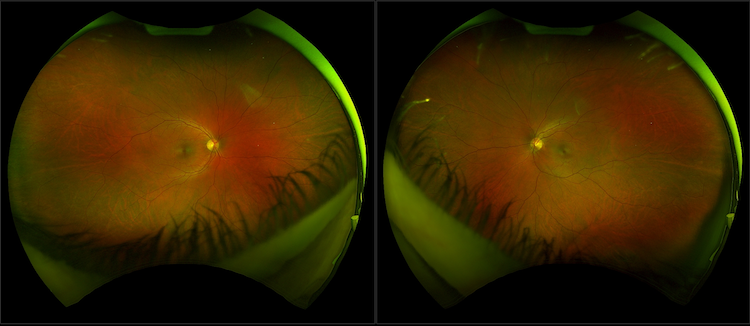 At Sunset Optometry, we use advanced technology to help protect your vision. Our office offers Optomap® ultra-widefield retinal imaging, a quick and comfortable way to take a detailed picture of the back of your eye. Optomap allows Dr. Weissenberg to see up to 200 degrees of the retina in a single image. This technology helps detect early signs of eye disease and other health conditions that may affect your vision.
Optomap imaging can help identify conditions such as:
- Macular degeneration
- Glaucoma
- Retinal tears or detachments
- Diabetic retinopathy
- Hypertensive retinopathy
- Other retinal abnormalities
The scan is fast, non-invasive, and typically does not require dilation, making it a convenient option for many patients. The images are stored in your record so we can monitor changes in your eye health over time. Optomap is an important tool in helping us provide thorough, preventative eye care. Ask about Optomap retinal imaging at your next eye exam at Sunset Optometry.
How often should I get a comprehensive eye exam?
Most eye care professionals recommend yearly eye exams. But it depends on your age, risk factors, and whether or not you wear corrective lenses.
The American Optometric Association (AOA) recommends children have their eyes examined at 6 months old, three years old, at the start of school, and every two years until age 18.
For adults, the AOA recommends a comprehensive eye exam every two years for ages 18 to 60 at minimum and annual exams for seniors age 61 and older.
What about contact lens exams?
A comprehensive eye exam typically does not include a contact lens fitting. So you may need to schedule a separate contact lens exam.
Just let us know when you schedule your appointment, and we’ll make sure you are taken care of.
Make healthy vision a priority in your life and in the lives of the ones you love. Schedule a comprehensive eye exam at Sunset Optometry now.